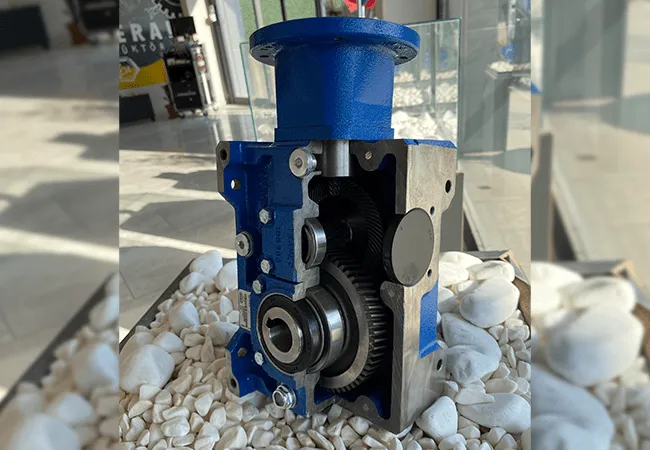
Industrial machinery is the backbone of modern production systems, enabling industries to manufacture goods efficiently, safely, and at large scale. Behind the smooth operation of these machines lies an essential mechanical component known as the redüktör, or gearbox. Redüktör systems play a critical role in controlling speed, increasing torque, and ensuring that machinery operates with precision and reliability across a wide range of industrial applications.
A redüktör is a mechanical device designed to reduce the speed of a motor while increasing its torque output. This function is necessary because most industrial machines do not require high-speed rotation; instead, they depend on strong, controlled force. Electric motors typically generate high rotational speeds, which must be adjusted to suit specific machine requirements. Redüktör systems bridge this gap by converting fast motor output into usable mechanical power for heavy-duty operations.
One of the most common applications of redüktör systems is in conveyor systems. Conveyor belts are widely used in industries such as mining, logistics, packaging, and food processing. These systems require consistent and controlled movement to transport materials efficiently. Redüktör gearboxes help regulate belt speed and maintain smooth operation, preventing sudden movements that could damage products or disrupt production flow.
Another important application is in heavy machinery used in construction and mining. Equipment such as excavators, cranes, and drilling machines require extremely high torque to lift, dig, or move heavy materials. Redüktör systems provide the necessary force multiplication to handle these demanding tasks. Without gear reduction, motors alone would not be capable of delivering the required mechanical power safely and efficiently.
In manufacturing industries, redüktör systems are widely used in automated production lines. Machines such as robotic arms, CNC machines, and assembly systems rely on precise motion control to perform repetitive tasks with accuracy. Gear reducers ensure that these machines operate at controlled speeds, improving product quality and reducing the risk of errors. This precision is especially important in industries such as automotive manufacturing, electronics, and aerospace production.
Mixing and processing equipment is another area where redüktör applications are essential. Industries such as food production, chemicals, and pharmaceuticals use industrial mixers, blenders, and agitators that require stable torque to handle thick or viscous materials. Redüktör systems provide consistent power delivery, ensuring that mixing processes remain uniform and efficient throughout operation.
Redüktör systems are also widely used in energy production facilities. Wind turbines, for example, rely on gearboxes to convert the slow rotation of turbine blades into higher-speed motion suitable for electricity generation. Similarly, in hydroelectric and thermal power plants, gear reducers help regulate mechanical energy transfer and improve overall system efficiency.
Modern industrial machinery increasingly depends on automation and smart control systems, which has expanded the role of advanced redüktör technologies. Many modern gearboxes are equipped with sensors that monitor temperature, vibration, and load conditions in real time. This allows for predictive maintenance, reducing unexpected breakdowns and improving operational reliability.
Different types of redüktör systems are used depending on the application. Helical gear reducers are preferred for smooth and quiet operation, while planetary gear systems are used for high torque in compact spaces. Worm gear reducers are suitable for applications requiring high reduction ratios and stable load control.
In conclusion, redüktör systems are essential components in a wide range of industrial machinery applications. From conveyor belts and heavy construction equipment to automated production lines and energy systems, they ensure efficient power transmission, precise control, and reliable performance. As industries continue to advance, the importance of redüktör technology will only grow, supporting the development of smarter and more efficient industrial machinery.